

- By Admin
- 29 Oct 2026
- Truck Licence Guide
- 16 min read
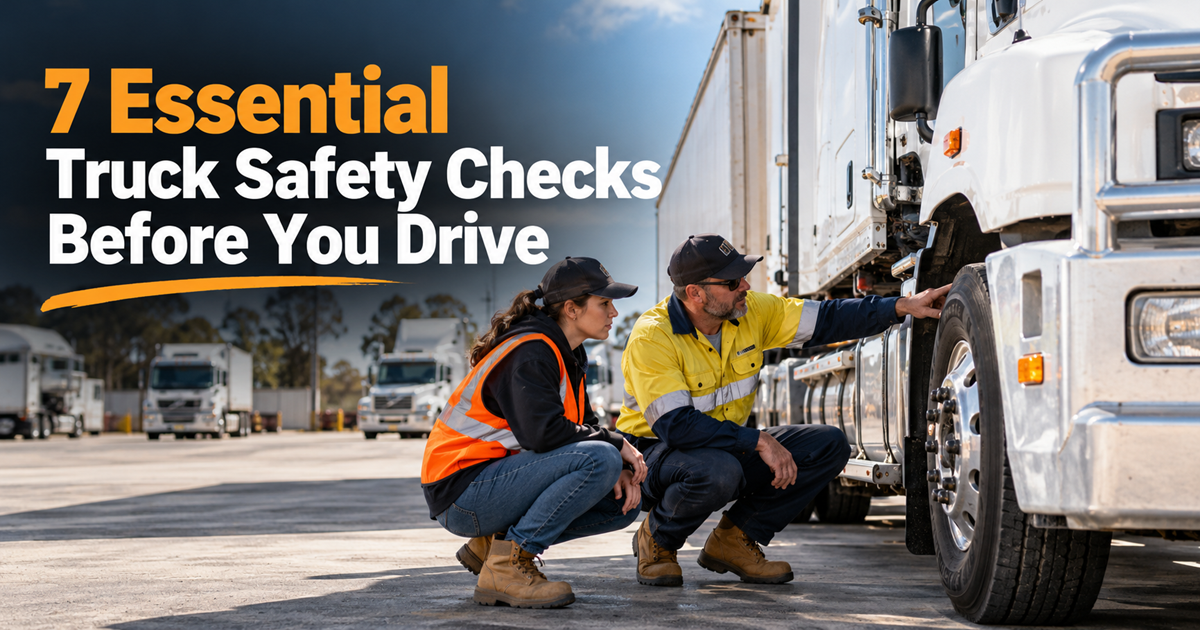
7 Essential Pre-Start Truck Safety Checks Every New Driver Should Know
Before you take a heavy vehicle onto the road, there's something just as important as knowing how to drive it: making sure the truck is safe to operate.
For new drivers, a pre-start inspection might seem like another task to remember. But checking the vehicle before a trip can help identify problems with tyres, brakes, lights and other important components before they become serious safety risks.
Whether you're learning to drive a Heavy Rigid (HR) truck or preparing for Heavy Combination (HC) or Multi Combination (MC) training, understanding basic safety checks is a useful skill.
A truck pre-start inspection involves checking the vehicle's condition, identifying visible defects and confirming that important safety systems are working before driving.
Here are seven essential checks every new heavy vehicle driver should understand.
What Is a Truck Pre-Start Safety Check?
A truck pre-start safety check is an inspection carried out before operating a heavy vehicle.
It usually involves walking around the vehicle, checking visible components and confirming that relevant equipment and safety systems are functioning correctly.
The purpose is to identify potential problems before leaving the depot, training centre or parking area.
The National Heavy Vehicle Regulator (NHVR) provides guidance on daily vehicle checks covering tyres, brakes, lights, couplings, mirrors and other components.
The inspection requirements depend on the vehicle type, its equipment and the operator's procedures.
For learners attending a truck driving school in Perth , becoming familiar with these checks is part of developing good heavy vehicle driving habits.
1. Inspect the Tyres, Wheels and Wheel Nuts
Tyres are one of the first things to examine during a pre-start inspection.
Heavy vehicles carry substantial weight, so tyre and wheel condition matters for safe operation.
Walk around the truck and look for:
- Visible tyre damage, including cuts or bulges
- Signs of underinflation
- Unusual or uneven tyre wear
- Missing, loose-looking or damaged wheel nuts
- Damage around wheels and hubs
- Objects lodged between dual tyres
Check tyre pressures and tread condition using the appropriate equipment and inspection procedures.
If the vehicle has wheel nut indicators, they may help you spot changes that need further investigation.
Don't assume a tyre is safe simply because it still has air in it.
If you notice something unusual, report it and have the condition assessed before driving.
2. Check All Lights and Indicators
Your truck's lights help other road users understand what you're doing.
Before starting a journey, check the relevant lights and reflectors.
These may include headlights, brake lights, indicators, hazard lights, tail lights and clearance lights.
If you're operating a truck and trailer combination, remember that the trailer's lights also need attention.
Look for damaged lenses, missing reflectors or lights that aren't operating correctly.
Ask someone to assist if you cannot safely confirm the operation of particular lights by yourself.
A light that works intermittently should still be reported.
Don't leave a lighting problem for the next driver to discover.
3. Check Mirrors, Windows and Windscreen Wipers
Heavy vehicles have significant areas that drivers cannot see directly.
That's why mirrors, windows and other visibility equipment are important.
Before driving, check that:
- Mirrors are secure and correctly positioned
- Mirror surfaces aren't cracked or obstructed
- Windows provide a clear view
- Windscreen wipers operate properly
- Windscreen washer equipment works
- Windscreen damage does not affect visibility
Adjust your driving position and mirrors before moving the vehicle.
If your truck has additional cameras or visibility equipment, follow the relevant operating instructions.
Remember that mirrors and cameras don't eliminate every blind spot. You still need proper observation and safe driving techniques.
At Roadmaster Truck Driving School in Perth , practical training includes mirror use, observation and road positioning as part of heavy vehicle driving preparation.
4. Check Brake Systems and Warning Indicators
A heavy vehicle needs a properly functioning braking system.
During your pre-start inspection, follow the vehicle-specific procedure for checking brake operation and relevant warning systems.
Depending on the truck, this may include checking:
- Brake warning lights
- Air pressure or other brake system gauges
- Relevant audible warnings
- Parking brake operation
- Visible signs of damaged brake components or air connections
For vehicles fitted with air brakes, the correct inspection procedure depends on the braking system and manufacturer's instructions.
If a brake warning remains active or a safety-related fault is identified, don't attempt to drive the vehicle until the issue has been assessed and resolved.
Never guess how to test an unfamiliar braking system.
Ask your instructor or a qualified person to demonstrate the correct procedure.
5. Look for Fluid Leaks and Engine Compartment Problems
Another useful habit is checking around and underneath the vehicle for signs of leaks.
Look for unexpected fluid on the ground or visible leaks around relevant components.
Depending on the vehicle, these may involve engine oil, coolant, fuel, hydraulic fluid or other operating fluids.
During the inspection, you may also need to check fluid levels and visible engine components according to the manufacturer's instructions.
Some checks require the engine to be off, cool or in another specified condition.
Don't open pressurised or hot components or reach into moving machinery.
If you notice a significant leak, damaged component or warning indicator, report it before operating the vehicle.
6. Inspect the Cabin and Safety Equipment
A safe truck inspection isn't limited to the outside of the vehicle.
Before moving off, spend time checking the cabin.
Important items may include:
- Driver's seat and seatbelt
- Steering controls
- Dashboard warning indicators
- Horn
- Doors and their locking mechanisms
- Required safety equipment
- Loose items that could interfere with driving
Make sure your seat is correctly adjusted and your seatbelt functions properly.
Check that your pedals and controls can be operated without obstruction.
Your driving position should allow you to reach the controls comfortably and maintain a clear view of the road.
It's also worth becoming familiar with the location of the vehicle's warning indicators and emergency equipment.
During HR Automatic Licence Training in Perth , learners develop practical vehicle control and pre-start inspection skills alongside safe road driving techniques.
7. Check Trailer Connections and Couplings
If you're operating a heavy combination or multi-combination vehicle, your inspection must also account for the trailer or trailers.
Trailer connections are particularly important because the vehicle is operating as a combination.
Depending on the configuration, inspection points may include:
- Fifth-wheel or other coupling security
- Trailer connection points
- Air hoses and electrical connections
- Safety locking mechanisms
- Trailer lights and tyres
- Visible damage around the coupling area
- Load restraint and load security, where applicable
The exact checks and coupling procedures depend on the vehicle combination.
A coupling inspection should be completed using the appropriate procedure for that equipment.
If you aren't trained in the procedure, don't attempt to couple, uncouple or test the trailer independently.
Have a qualified instructor or operator demonstrate it.
Roadmaster provides HC Licence Training in Perth , which covers combination vehicle checks, coupling procedures and practical trailer-handling skills.
Drivers progressing to larger combinations can also explore MC Licence Training .
Quick Truck Pre-Start Inspection Checklist
Before driving, use a checklist suited to your vehicle and workplace procedures.
| Inspection area | What to look for |
|---|---|
| Tyres and wheels | Damage, inflation, tread and wheel security |
| Lights | Working headlights, indicators, brake lights and reflectors |
| Mirrors and windows | Clear visibility, secure mirrors and working wipers |
| Brakes | Appropriate operation, gauges and warning indicators |
| Engine and fluids | Visible leaks, fluid levels and damage |
| Cabin | Seatbelt, controls, horn and safety equipment |
| Trailer, if fitted | Coupling security, connections, lights and load restraint |
This is a general learning checklist rather than a complete vehicle inspection procedure.
Always follow the manufacturer's instructions, your operator's procedures and applicable roadworthiness requirements.
What Should You Do If You Find a Problem?
If you identify a problem during your pre-start inspection, don't ignore it.
Report the issue to your instructor, supervisor or the person responsible for the vehicle.
The next step depends on the nature of the fault.
Some issues may require further inspection, maintenance or repair before the truck can be used.
If a fault makes the vehicle unsafe or unroadworthy, it must not be driven until the problem is appropriately resolved.
A pre-start check is only useful when drivers act on what they find.
Why Are Pre-Start Checks Important During Truck Driving Training?
Learning to operate a heavy vehicle involves more than steering, braking and changing gears.
Drivers also need to recognise when a vehicle may be unsafe to operate.
Becoming familiar with pre-start inspections during training can help you develop a consistent routine.
For example, a new HR learner may need time to understand tyre inspections, mirrors and cabin controls.
Someone upgrading to HC or MC training will also need to become familiar with trailer connections and combination-specific safety procedures.
These checks become part of everyday professional driving.
If you're preparing for your first lesson, our guide on what to expect during your first truck driving lesson in Perth explains how practical training begins.
Learn Practical Truck Driving Skills with Roadmaster in Perth
Roadmaster Truck Driving School provides heavy vehicle training from its Maddington location in Perth, Western Australia.
The school offers practical training for eligible learners preparing for HR, HC and MC licence pathways.
Available options include:
- HR Automatic Truck Training
- HR Synchromesh Truck Training
- HR Road Ranger Truck Training
- HC Heavy Combination Training
- MC Multi Combination Training
Training covers relevant practical driving skills, including vehicle familiarisation, observation, road positioning and preparation for the applicable assessments.
Roadmaster also offers one-on-one coaching options to help learners work on the areas where they need further practice.
If you're considering your first truck licence or planning to upgrade, explore the truck driving courses available in Perth .
Start Your Truck Driving Training in Perth
A good truck driver needs to understand the vehicle before taking it onto the road.
Learning how to identify potential safety problems is a practical skill that can help you throughout your heavy vehicle driving career.
Whether you're preparing for an HR licence or upgrading to HC or MC, Roadmaster Truck Driving School offers training options to suit different licence pathways.
Ready to Start Your Truck Driving Training?
Book Your Truck Driving Training in PerthRoadmaster Truck Driving School
61 Clifford Street, Maddington WA 6109
Phone: 0451 370 037
Website: www.roadmasterdrivingschool.com.au
This article provides general driver education. It is not a complete vehicle inspection checklist or a substitute for practical instruction, manufacturer procedures or applicable heavy vehicle safety requirements.
Frequently Asked Questions
What should I check before driving a heavy vehicle?
Check the vehicle's tyres, wheels, lights, mirrors, brakes, visible leaks, cabin safety equipment and any trailer connections. Follow the inspection procedure appropriate to the specific vehicle.
What is the purpose of a truck pre-start inspection?
A pre-start inspection helps identify visible defects and safety problems before the vehicle is operated.
Do HC and MC trucks need additional safety checks?
Combination vehicles require relevant trailer and coupling checks in addition to checks on the truck itself. The procedure depends on the configuration.
What should I do if I discover a brake or tyre problem?
Report the problem and have it assessed. Do not operate a vehicle that is unsafe or unroadworthy.
Can I learn pre-start inspection skills during HR truck training?
Yes. Roadmaster's HR training covers practical vehicle familiarization and relevant pre-start checks as part of heavy vehicle driving preparation.
Where can I book truck driving lessons in Perth?
Roadmaster Truck Driving School offers HR, HC and MC training from Maddington, Perth. You can contact the team to discuss available courses and book an appropriate training session.